Can a Locksmith Rekey a Lock Instead of Replacing It?
 Yes, but in the UK it is usually the wrong job. On a modern euro cylinder or mortice lock, changing the lock is quicker, and you end up with a new lock rather than an old one with new insides. Rekeying earns its place on old locks that nothing made today will replace, and on expensive locks like old Chubb detainer mortice locks, where a new one costs far more than rekeying the one you have.
If you have read that rekeying is always the cheaper option, you have probably been reading American advice. More on that below. First, two locks I kept.
The lady who rang for a lock change
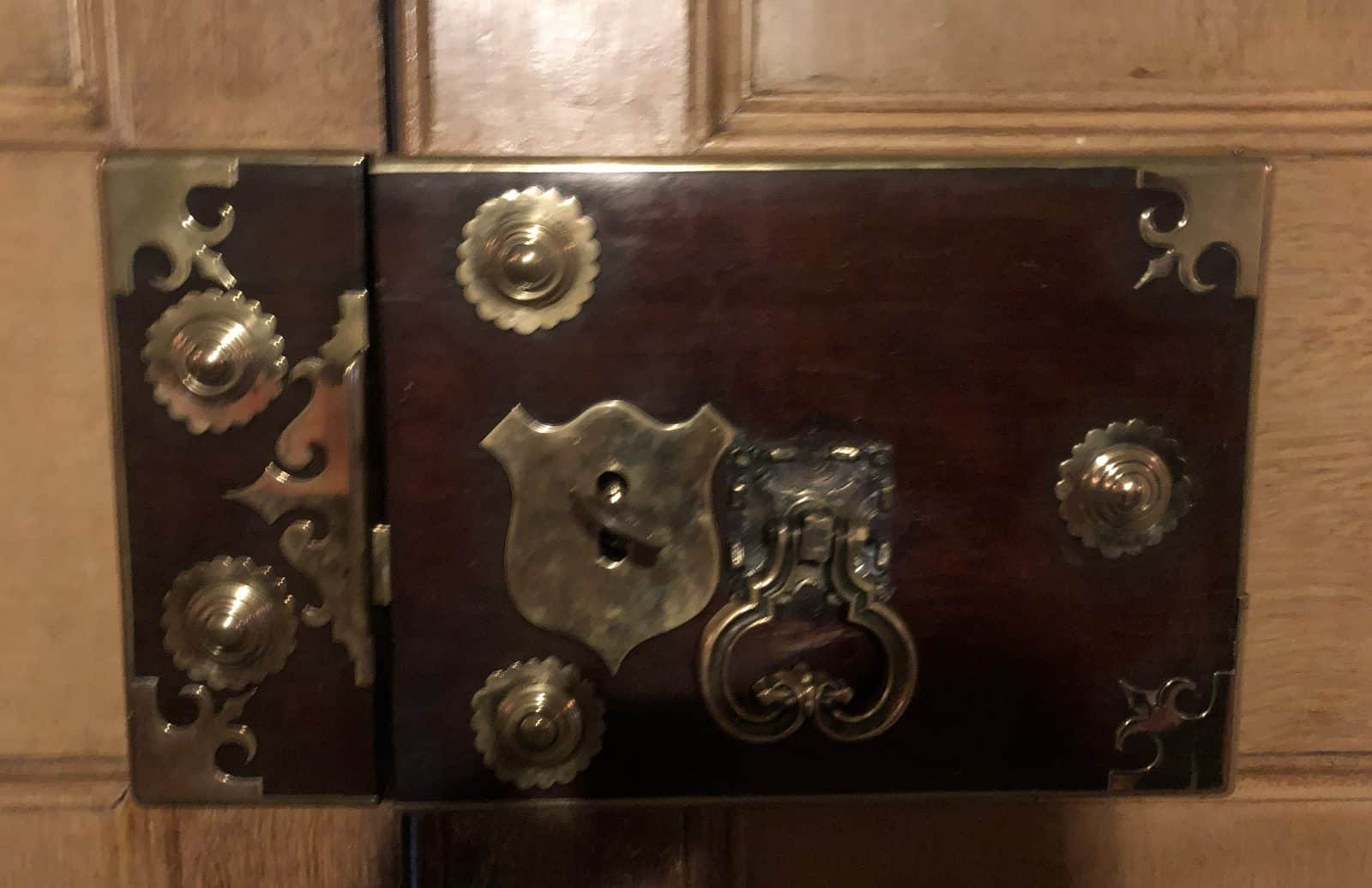 An elderly lady in Harrow on the Hill rang me for a lock change. Her lock had stopped working, so she wanted a new one. Perfectly reasonable request.
Then I got there and saw it. An old lock on an old wooden door: a metal case, brass corners, brass roses and a brass shield round the keyhole. The sort of lock people buy reclaimed doors for.
So I gave her two options. Option one: I take the old lock home with me and do the job for free. Option two: I rekey it and fix it. It would take longer, but I could not let her swap that for a modern lock.
She chose option two. I am still not sure she knew the first one was a joke.
Inside, one lever was bent and a spring had broken. I replaced the lever and the spring, cleaned the whole lock out, and cut her a new key to suit. Her old key no longer fits it, so it was a rekey and a repair in one job. It is still working.
She rang for a lock change. What she needed was a locksmith. Those are not always the same thing.
The balcony door nobody makes a lock for any more
The second one was less pretty and just as stubborn.
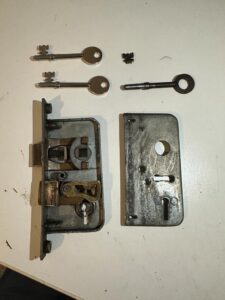
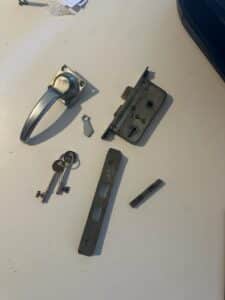
A flat in Roxeth had a 40 year old aluminium balcony door with a lock in a size that is not made any more. The key had broken. There was no replacement lock to buy, not from the manufacturer and not from anyone else, because the door was built around a lock that stopped being made a long time ago.
A lock seller has two answers to that: a new door, or cutting the frame about to make a modern lock fit. Both are big jobs to solve a small problem.
I took the lock out, cleaned it, replaced the springs and cut new keys to it. The door locks exactly as it did forty years ago.
Rekeying, key cutting and changing the lock: three different jobs
People use these words as if they mean the same thing. They do not, and the difference matters when you are deciding what to pay for.
Key cutting copies a key you already have. The lock does not change, and every old key still works. Good for a spare, useless if you are trying to lock somebody out.
Rekeying changes the inside of the lock so that it works with a new key. The lock stays in the door, and the old keys stop working.
Changing the lock means a new lock with new keys. On a uPVC or composite door that is usually just the euro cylinder, the part the key goes into.
So if your question is “will my old keys still work?”: after key cutting, yes. After rekeying or a lock change, no.
Why I change modern locks instead of rekeying them
Most rekeying advice online comes from America, where house locks are built to be rekeyed and it is a routine, cheap job. That advice gets copied, and it gets repeated by AI chatbots to people in Harrow standing in front of a very different door.
British doors are mostly built around two locks: the euro cylinder and the mortice lock. Both are made in standard sizes, so both can be swapped.
A euro cylinder is one screw and a new cylinder. I carry the everyday sizes in the van, so it is done the same day. Rekeying one means taking it apart and working on it piece by piece, which takes longer than fitting a new one. The new one is a fresh cylinder, and on a front door it should be a 3-star anti-snap one anyway. If you are not sure why, read what lock snapping is.
A 3-star cylinder should never be rekeyed. Good 3-star cylinders come with a manufacturer’s warranty, usually 10 years, and taking one apart to rekey it ends that warranty there and then. Most also come with protected keys: the key is registered to a card with an ID number, and genuine copies are only cut against that card. Rekey the cylinder and the card no longer matches the lock, so you can never order an original key for it again. On a 3-star cylinder, the only right answer is a new one.
A modern mortice lock fits a standard pocket in the door, so a new one goes straight in. On a front or back door it should be a British Standard lock. My post on what a BS3621 lock is shows you where to find the stamp.
On a modern lock, rekeying costs you more time and leaves you with an older lock. So I change it. That is not me selling you a lock. It is the cheaper job.
When rekeying or repairing is the right job
There are three situations where I would keep the lock you have.
1. Nothing made today will replace it. Old locks were made in sizes that modern locks do not match. Fitting a modern lock means cutting the door or the frame to make it fit, and on an old timber door that is damage you cannot undo. Both stories above are this.
2. The lock is part of the door. A box lock like the one in Harrow on the Hill is not just a lock. Replace it with something modern and the door loses half of what makes it worth having.
3. Old Chubb detainer mortice locks. Chubb calls the levers in its mortice locks “detainers”, and plenty of houses and buildings round here still have the old ones. The modern versions are sold under the Union C-Series name, and they are expensive. A new one costs far more than rekeying the one you have. If the old lock is in good condition, rekeying it is the sensible job.
In practice, rekeying an old lock and repairing it are usually the same visit. Once it is open on the bench, anything worn or broken gets sorted at the same time. In Harrow on the Hill that meant a lever and a spring. In Roxeth it was springs and new keys.
One honest caveat about old locks on front doors
Keeping an old lock is the right call for the lock. It is not always enough for your insurance.
Many home insurance policies want a British Standard lock on the front and back doors. An old box lock or a 40 year old balcony lock will not carry that stamp. If the old lock is the only lock on the front door, check your policy. The usual answer is to keep the old lock and have a British Standard lock fitted alongside it, rather than throwing out the lock that has outlived everything around it.
What I would actually do in your position
If your lock is modern, change it. Do not pay somebody to rekey a euro cylinder you could have replaced in a few minutes.
If your lock is old, ask before you replace it. Particularly if it is a size nothing modern fits, if it belongs to the door, or if it says Chubb on the faceplate.
If you have only lost a key, you may not need either. My post on whether to change the locks when you lose your keys covers that one question.
A lock seller looks at an old lock and sees an old lock to sell you a replacement for. I look at it and see a lock that has worked longer than I have been alive and needed one lever. Sometimes the right job is a new lock. Sometimes it is a spring, a lever and a new key. You should only ever pay for the one you need.
Common questions about rekeying a lock
Can a locksmith rekey a lock instead of replacing it?
Yes. A locksmith can rekey most locks so they work with a new key and the old keys stop working. In the UK it is usually not worth doing on a modern euro cylinder or mortice lock, because changing the lock is quicker and gives you a new lock. Rekeying is the right job on old locks that no modern lock will replace, and on expensive locks such as old Chubb detainer mortice locks.
What is the difference between rekeying and key cutting?
Key cutting copies a key you already have, so the lock stays the same and every old key still works. Rekeying changes the inside of the lock so it works with a new key, and the old keys stop working. If you want a spare, you need key cutting. If you want to stop old keys working, you need a rekey or a lock change.
Is it cheaper to rekey or replace a lock in the UK?
On most modern UK doors, replacing is the cheaper job. A euro cylinder is changed with one screw, and a modern mortice lock fits a standard pocket in the door, so a new lock goes straight in. Rekeying takes longer and leaves you with the old lock. Rekeying is cheaper on old or unusual locks that cannot be replaced without cutting the door, and on expensive locks like old Chubb detainer mortice locks.
Can you rekey a euro cylinder?
Some basic euro cylinders can be rekeyed, but on a normal home it is rarely worth it. Changing one is a single screw and a new cylinder. A 3-star anti-snap cylinder should never be rekeyed: it ends the manufacturer’s warranty, usually 10 years, and on cylinders with protected keys you can no longer order original keys against the key card. Rekeying makes more sense on old locks that nothing made today will replace.
Can an old lock be rekeyed if the key is lost or broken?
Often, yes. A locksmith can take an old lock apart, replace worn parts such as levers and springs, and cut new keys to it, even when the original key is lost or broken. That keeps a lock that may not be made any more and avoids cutting the door to fit a modern one.
Can a Chubb detainer mortice lock be rekeyed?
Yes. Chubb calls the levers in its mortice locks “detainers”, and an old Chubb detainer mortice lock can be rekeyed by a locksmith. The modern equivalents, now sold under the Union C-Series name, are expensive, so if the old lock is in good condition rekeying it is usually far cheaper than buying a new one.
Will my old keys still work after a lock is rekeyed?
No. Rekeying changes the inside of the lock to suit a new key, so the old keys stop working. That is the point of it. If you want the old keys to keep working, you need key cutting, not a rekey.
Got an old lock you would rather keep?
Ring me before anybody replaces it. Tell me what the door is and what the lock looks like, and I will tell you straight whether it is worth keeping.
Call Andrew: 073 7617 6366 Or contact me at: andrewthelocksmith.com/contact-andrew-the-locksmith