What Is the Best Lock for a Front Door in the UK?

The best lock for a front door in the UK depends on the door itself. If you’ve got a timber door, you want a BS3621 five-lever mortice deadlock, ideally paired with a nightlatch. If you’ve got a uPVC or composite door, you want a TS007 3-star (or Sold Secure Diamond) anti-snap euro cylinder. Get the standard right and you’ve covered off both burglars and your home insurer in one go. Everything else is detail.
A couple in North Harrow called me last year after a break-in on their street, wanting their front door “made secure.” Nice composite door, only a few years old. The trouble was the cylinder inside it: a bog-standard euro cylinder with no anti-snap rating at all, the kind builders and developers fit by the boxful because they’re cheap.
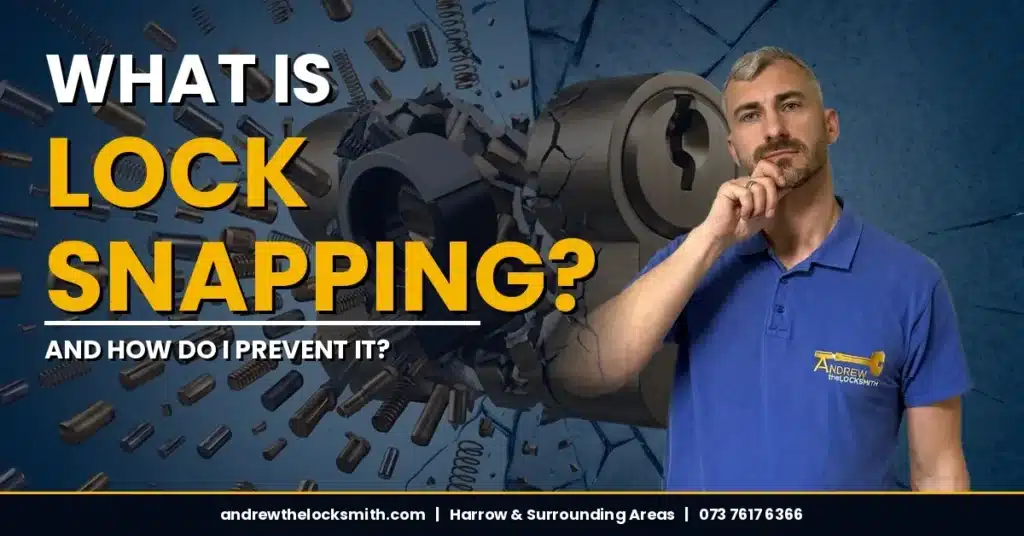
That’s the one every decent burglar in London knows how to beat. Lock snapping takes seconds, no noise, no fancy tools. The expensive-looking door was doing almost nothing, because the £15 part hidden inside it was the weak link.
I swapped it for a TS007 3-star anti-snap cylinder that afternoon. Same door, same handles, same everything the neighbours could see. The only thing that changed was the one part that actually mattered. The couple had
assumed a modern door meant a secure lock. It doesn’t. Developers fit doors to a budget, not to a burglar’s shopping list.
That’s the thing about front door locks: the bit that keeps you safe is usually the bit you can’t see.
Step one: what kind of door have you got?
You can’t pick the best lock until you know the door, so start here.
Timber (wooden) doors are the older, solid or panelled doors you’ll find on a lot of period houses around Harrow, Pinner and Stanmore. These take a mortice lock (the one set into the edge of the door) and usually a nightlatch (the Yale-style latch that clicks shut behind you).
uPVC and composite doors are the newer plastic or composite front doors on most homes built or refitted in the last twenty-odd years. These use a multipoint locking mechanism driven by a euro cylinder, the part your key goes into. Lift the handle, turn the key, and bolts shoot out at several points up the frame.
The locks that suit one are wrong for the other, which is exactly why “what’s the best front door lock” has no single answer.
The best lock for a timber front door
For a wooden front door, the gold standard is a BS3621 five-lever mortice deadlock. BS3621 is the British Standard almost every UK home insurer asks for. It’s tested to resist drilling, pic
king and sawing, and it’s the wording you’ll find buried in most policies. Look for the British Standard Kitemark (a heart-shaped BSI stamp) on the faceplate.
Good options here come from ERA, Union, Chubb and Yale, who all make BS3621 five-lever mortice locks. For everyday use, pair that deadlock with a British Standard nightlatch (ERA and Yale both make BS3621-rated ones) so the door locks behind you when it shuts. The nightlatch is your everyday convenience; the mortice deadlock, thrown with the key, is what gives you real security and keeps your insurance valid.
One honest word of warning: a five-lever lock is not automatically BS3621. Plenty of cheap five-lever locks exist that don’t meet the standard. If there’s no Kitemark stamped on it, treat it as decorative.
A neat alternative: if you’d rather have one key working the whole door, I can swap the traditional lever mortice lock for a British Standard euro mortice deadlock kit, complete with a euro cylinder. It fits the same mortice pocket but takes a euro cylinder, so you get the same key type as a modern door and, if you ever need to, you can upgrade just the cylinder later rather than the whole lock. Fitted to standard, it satisfies your insurer the same way a BS3621 lever lock does.
The best lock for a uPVC or composite front door
For uPVC and composite doors, the multipoint mechanism is usually fine. The weak point is nearly always the euro cylinder, and that’s what gets attacked with lock snapping, the technique behind a large share of UK burglaries.
What you want is an anti-snap cylinder carrying one of these two marks:
- TS007 3-star, or
- Sold Secure Diamond (SS312)
Either one means the cylinder is built to resist snapping, drilling, bumping and picking. (You can also reach a 3-star rating with a 1-star cylinder plus a 2-star security handle, but a single 3-star cylinder is simpler and I’d fit that every time.)
For brands, this is what I fit and trust:
- Apecs AP 3-star is my go-to. It carries the BSI Kitemark and the Sold Secure Diamond rating, so it’s tested to the top level, and it has a clever bit most cylinders don’t: if it does get snapped, the mechanism lets you still open the door from inside and get out. Properly built, fairly priced, and it’s what I fit day in, day out.
- Yale Platinum 3-star is another safe choice. Widely available, properly certified, several separate lines of defence built in.
- ERA anti-snap cylinders round it off, another solid British brand with 3-star options.
Whatever you fit, get the cylinder measured properly. A euro cylinder that sticks out past the handle by even a few millimetres gives a burglar something to grab and snap. Correct sizing matters as much as the star rating, and it’s where a lot of DIY jobs go wrong.
What about the standards on my insurance?
This trips people up, so here’s the plain version. For timber doors your insurer wants BS3621. For uPVC and composite doors there’s no BS3621 (it doesn’t apply to cylinders), so the equivalent is a TS007 3-star or Sold Secure Diamond anti-snap cylinder. Fit the right standard for your door type and you’ve satisfied virtually every standard UK home insurance policy. If you want the deeper detail on why snapping matters so much, I’ve explained it fully in my post on lock snapping and how to prevent it.
ANDREW’S ADVICE
Don’t buy a lock by the box it comes in or the shine on the handle. Buy it by the standard stamped on it and whether it’s right for your door. A £1,200 composite door with a £15 unrated cylinder is a £1,200 mistake. A plain timber door with a proper BS3621 deadlock is doing its job.
And here’s where I’ll save you money rather than spend it: you very rarely need to replace a whole lock or a whole door. On a uPVC or composite door, upgrading just the euro cylinder to a 3-star anti-snap one usually does the entire job, for a fraction of what a “lock seller” will try to charge you for a full mechanism you don’t need. A problem solver fixes the weak part. A lock seller sells you the whole door.
If you’re not sure what you’ve got, I’ll take one look and tell you straight: whether your current lock meets standard, whether it’s the right one for your door, and whether it actually needs changing at all. I publish my rates openly on my prices page so you know the cost before I turn up.
Not sure if your front door lock is up to standard? Send me a photo or call me, and I’ll tell you exactly what you need, and what you don’t.
Call Andrew: 073 7617 6366 Or contact me at: andrewthelocksmith.com/contact-andrew-the-locksmith
Andrew the Locksmith is a Master Locksmiths Association member serving Harrow, Kenton, South Harrow, North Harrow, Pinner, Wembley, Watford, Ruislip, Northolt, Stanmore, Wealdstone, and surrounding areas. No call-out fee. Clear prices on the phone.