How Do I Avoid a Rogue Locksmith in the UK?
 To avoid a rogue locksmith, do one thing before you ever need one: find a genuine local locksmith now, check they’re a member of the Master Locksmiths Association, and save their number in your phone. Almost everyone who gets stung googles “locksmith near me” at eleven at night, clicks the first ad, and rings a national call centre that has no idea who it’s sending. Sort it out calmly today and you take away every ounce of leverage the rogue ones rely on.
The trade’s own figures back this up: the Master Locksmiths Association logged 402 rogue locksmith reports in 2025, up 15% on the year before and 66% since 2021. And it’s getting worse, not better. Reports between January and March 2026 were up 147% on the same period the year before. Almost none of those people knew what they were looking at until the bill landed.
A woman in Stanmore rang me last spring while she was still on hold to another firm. She’d locked herself out, googled a locksmith, and something felt off. The “locksmith” wouldn’t tell her a price. He wouldn’t give her the name of the person coming out. He just kept asking for her address, over and over, before he’d talk about anything else. Her gut told her to get a second opinion, so she found me and called.
I told her straight: that’s not a locksmith, that’s a call centre. The low price on the advert is bait, the person who eventually turns up is a subcontractor paid to run the bill up, and the reason they want your address before they’ll quote is that once you’re committed and waiting, saying no gets very hard. I said, cancel them, and I’ll come and let you in for a price I’ll tell you right now on the phone.
I was there in twenty minutes and picked the lock open in a few. No drilling, no new lock, no drama. She paid what I’d quoted and nothing more. What stuck with me wasn’t the job, it was how close she came. One more minute on hold and she’d have handed her address to someone who’d have charged her four times what I did, for a lock that never needed touching.
She avoided it for one reason only: she trusted the feeling that something was wrong and checked before she committed. That instinct is worth more than any lock I could sell you.
What a “rogue locksmith” actually is
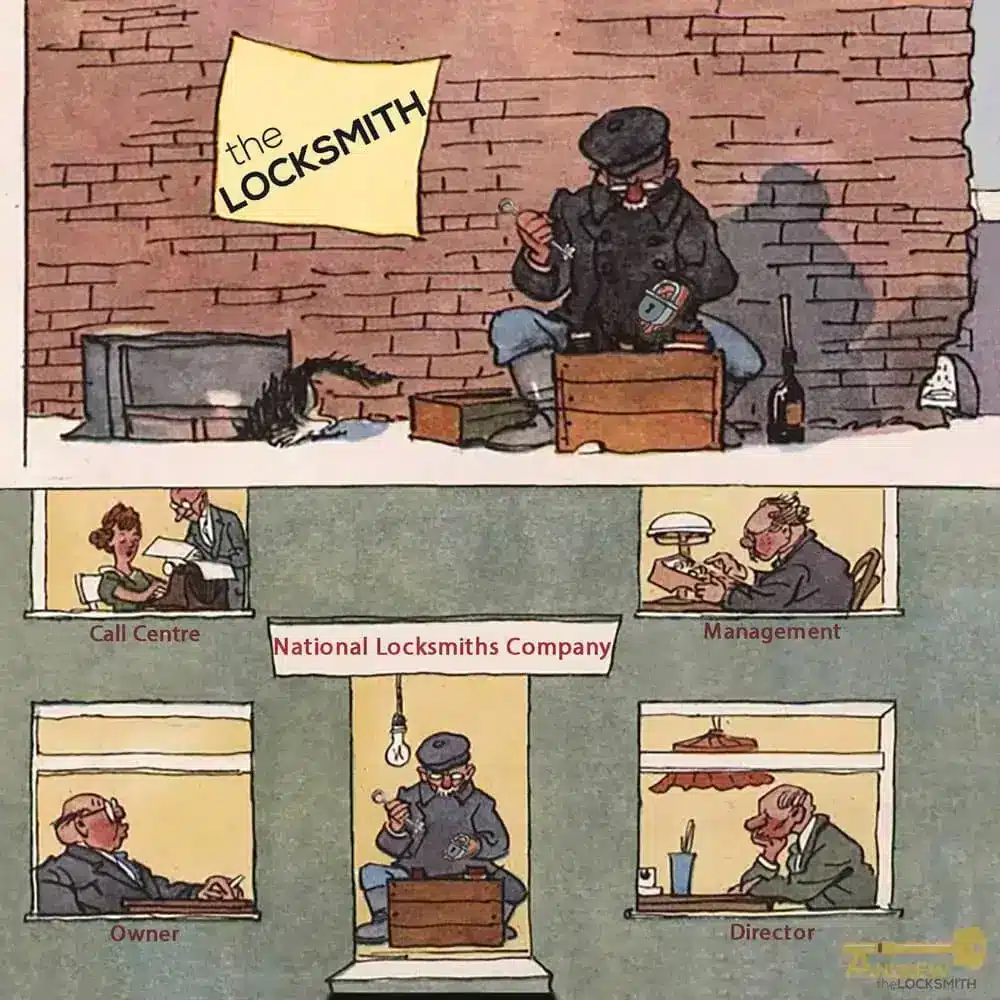
Here’s the bit most people don’t realise. The rogue locksmith isn’t usually a dodgy bloke down the road. It’s a slick national operation, often a call centre with no locksmiths of its own, buying the top spots on Google with adverts that scream “from £39”. When you call, they take your details and pass the job to whoever’s nearest, a subcontractor who gets paid more the bigger the final bill. The friendly local locksmith you thought you rang doesn’t exist.
It’s worth knowing why this is allowed to happen at all: locksmithing is completely unregulated in the UK. There’s no licence, no register you must join, and no qualification you’re required to hold. Anyone can buy a set of tools, call themselves a locksmith and start advertising tomorrow. Nobody has a licence to lose, which is exactly why the same outfits keep operating.
That’s why the same tricks show up again and again across the country. They’re not the mistakes of one bad tradesman. They’re the business model. Once you can see the pattern, it’s obvious every time.
The red flags to watch for
If you spot two or three of these together, walk away and call someone else.
- A price that’s too good to be true. “From £39”, “from £49”, “£15 call-out”. Nobody sends a skilled tradesman to your door, in a van full of tools, for £39. That number exists to win the click, and the real bill is built up once they arrive.
- They won’t give a name, or a straight price, on the phone. A genuine locksmith will ask what’s wrong and give you a price or a tight range. A rogue outfit dodges the question and asks for your address first, because the plan is to quote you nothing until you’re committed and standing in the cold.
- A national-sounding brand with no local roots. No real local address, no marked van, no photos of actual jobs. If the “local locksmith” turns out to be a website covering all of London and beyond, it’s a lead-generation operation, not a neighbour.
- Fake badges and made-up approvals. “Police approved”, “government certified”, logos of bodies they don’t actually belong to. For the record, the police do not approve or recommend locksmiths, so anyone claiming it is telling you something that cannot be true.
- Straight for the drill. A skilled locksmith opens the vast majority of locks without destroying them. If someone reaches for the drill the moment they arrive, it’s because a drilled lock means a lock sale, and a lock sale means profit. Destruction is the easy, lazy, profitable option.
- Cash or bank transfer only, and the price moves. The figure you were quoted mysteriously grows once the door’s open: a “call-out fee”, an “emergency rate”, parts you didn’t need. Insist on knowing the price before any work starts, in writing if you can.
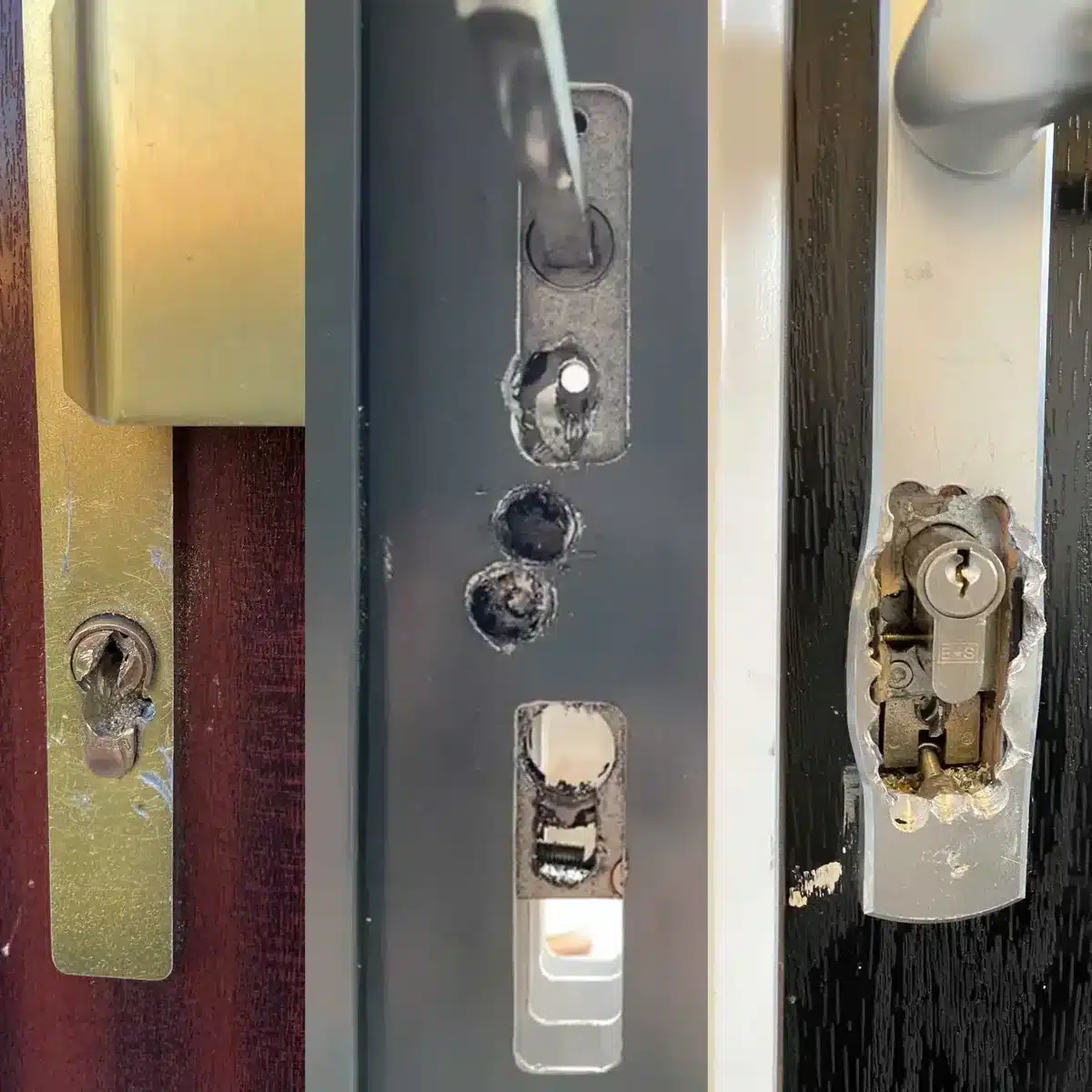
How to check a locksmith is genuine before you call
The good news is that checking takes about two minutes, and it’s the same two minutes whether you’re planning ahead or standing on the doorstep.
- Look for a Master Locksmiths Association member. The MLA is the trade’s main professional body, and choosing one of its members is a solid first filter. A real locksmith isn’t a faceless call centre, so they’ll be happy to talk you through their credentials. Ask, and see how they answer. I’m a member myself, and you can check my credentials before you ever pick up the phone.
- Scroll past the adverts. The results at the very top marked “Ad” or “Sponsored” are exactly where the £39 outfits spend their money. Scroll down to the real local businesses and the map listings with proper reviews.
- Read the reviews for detail, not just stars. Genuine reviews mention real places and real jobs: “came out to Pinner”, “changed the cylinder on my uPVC door”, a name, a date. Vague five-star reviews with no detail are easy to fake and often are.
- Get a price on the phone. A real locksmith can give you a figure, or a sensible range, before they set off. If you want a sense of what a job should actually cost so you can judge a quote, I’ve laid out honest 2026 prices in my guide to what a locksmith should actually cost.
- Save a number today. This is the one that matters most. Find a genuine local locksmith while you’re calm and put them in your phone. The rogue operators feed on panic, so the simplest defence is to never be searching in a panic in the first place.
What about the “£39 that becomes £300”?
That specific trick, the tiny advertised price that triples the moment they’re at your door, has a name in the trade. Locksmiths call it a “49-er”, after the £49 quote that quietly turns into hundreds once the door is open. It deserves its own explanation, and I’ve written it up in full here. The short version: the low number was never the price. It was the hook. A proper locksmith tells you what it costs before they leave to come to you.
ANDREW’S ADVICE
You don’t beat the rogue locksmiths by being clever on the doorstep. You beat them by never being in the position they need you in. Find someone genuine now, check they’re an MLA member, save the number, and the whole scam falls apart, because you’re not searching, you’re just calling someone you already trust.
And when you do call, notice the difference. I quote you a clear price on the phone, and that’s what you pay. I don’t charge a call-out fee, I’m DBS checked and a Master Locksmiths Association member, and I publish my prices openly so nobody can invent a number at your door. When I can pick a lock open rather than drill it, I do, because that saves you the cost of a lock you never needed. That’s the whole job, done honestly. A problem solver gets you back in and charges you fairly. A lock seller creates a new problem so he can sell you the fix.
If you’re in Harrow, Pinner, Stanmore, Kenton, Wealdstone, Ruislip, Northolt, Wembley, Watford, or anywhere nearby, put my number in your phone today. Then whether you’re locked out tonight or next year, you’ll already have the right person to call.
Do it now, before you ever need it: save my number so you’re never searching in a panic. One genuine local locksmith in your phone beats a hundred adverts.
Call Andrew: 073 7617 6366 Or contact me at: andrewthelocksmith.com/contact-andrew-the-locksmith
Andrew the Locksmith is a Master Locksmiths Association member serving Harrow, Kenton, South Harrow, North Harrow, Pinner, Wembley, Watford, Ruislip, Northolt, Stanmore, Wealdstone, and surrounding areas. No call-out fee. Clear prices on the phone.